

UNICA4EU Project Successfully Concludes: Pioneering AI Solutions for Childhood Cancer
The UNICA4EU project, a pioneering initiative aimed at leveraging Artificial Intelligence (AI) to combat childhood cancer in Europe, proudly announces the successful completion of its joint endeavour, supported by the European Commission. Childhood cancer remains a pressing health challenge, with approximately 35,000 new cases diagnosed annually in Europe. Recognizing the urgent need for innovative approaches, the UNICA4EU project has diligently worked towards setting the fundamentals to address data scarcity and fragmentation in paediatric oncology.
Over the course of its tenure, UNICA4EU has galvanized a collaborative effort among 15 partners across 8 European countries, including prominent organisations such as SIOP Europe and CCI Europe. Together, the consortium has laid the groundwork for a robust European Paediatric Cancer ecosystem, with a vision to revolutionize cancer care while upholding patient welfare and data protection.
Highlighting Key Achievements
Multi-disciplinary standards of care supported by Artificial Intelligence
Focused on harnessing the potential of AI in paediatric oncology while respecting standards and ethics, the UNICA4EU project has underscored the importance of leveraging diverse data sources to enhance diagnostic and therapeutic approaches. Emphasizing adherence to regulatory guidelines and best practices, our work has highlighted the critical need for comprehensive guidance in implementing AI in healthcare. Through tangible use cases and multidisciplinary cooperation, we have addressed challenges in data preparation, AI implementation, and regulatory frameworks.
UNICA4EU’s Knowledge Base
A cornerstone in the project’s trajectory, we have laid the foundation for AI application in paediatric cancer by creating a comprehensive framework. Through extensive surveys and focus group discussions, insights were gleaned to guide the project’s multidisciplinary approach towards the definition of governance structures for data sharing, ownership, and protection. The establishment of our Knowledge Base, featuring decision trees for AI development, key resources and references to critical cross-over –ethical, regulatory, legal and social– topics, further bolstered efforts to standardize data collection and leverage AI for paediatric cancer research.
Synergies with ongoing communities, outreach and exploitation
Dedicated to community building for paediatric haemato-oncology, UNICA4EU has successfully fostered collaboration and knowledge exchange among stakeholders, strengthening the foundation for future initiatives in the field. As the UNICA4EU project draws to a close, it leaves behind a legacy of collaboration, innovation, and hope in the fight against childhood cancer. All these efforts will culminate in the upcoming publication of a special edition of the European Journal of Cancer – Paediatric Oncology, featuring a collection of white papers and manuscripts authored by UNICA4EU consortium partners.
Through tireless efforts and unwavering dedication, the consortium has propelled the European Paediatric Cancer ecosystem towards a future where AI-driven solutions hold the promise of transforming lives. Moving forward, we invite stakeholders and supporters to share our vision for a brand-new European Childhood Cancer Data Initiative and join us in our ongoing endeavors to combat childhood cancer and ensure a brighter, healthier future for our children.
Photo by luis arias on Unsplash


The UNICA4EU Knowledge base: foundations and literacy for the use of AI in Childhood Cancer
The UNICA4EU initiative is dedicated to harnessing the capabilities of Artificial Intelligence (AI) to enhance the battle against childhood cancer throughout Europe. This project has led to the creation of an extensive knowledge base, which stands as a pivotal resource for stakeholders interested in the intersection of AI and childhood cancer management. This meticulously curated platform compiles insights from a diverse group of contributors, including caregivers, medical professionals, AI developers, and representatives from technology and industry sectors. It has been carefully designed to put the user at the very center, aiming to both educate and empower all participants in the realm of pediatric oncology.
The knowledge base is structured around two principal features:
- A decision tree: This intuitive visual tool provides a clear roadmap for the comprehensive process of designing, developing, testing, and deploying AI solutions in the context of childhood cancer.
- Thematic bookshelves: Organized by specific topics, these sections gather relevant information, underscore the challenges encountered, and offer practical advice on the application of AI across various facets of managing the disease.
With its user-friendly interface, the knowledge base is poised to become an indispensable tool, encouraging ongoing engagement from the community. The launch of this platform by the UNICA4EU consortium marks the beginning of a broader endeavor aimed at exploiting AI technologies to enhance the speed and quality of care provided to children facing cancer.

A New Milestone in AI for Pediatric Oncology: Our interview with Prof. Pamela Kearns
In this exclusive interview, Professor Pamela Kearns, a leading figure in pediatric oncology at the University of Birmingham and former president of SIOP Europe, shares her insights as the project lead of the groundbreaking UNICA4EU initiative. During these past 18 months, everyone at UNICA4EU has been hard at work to harness the potential of Artificial Intelligence to tackle unmet needs in pediatric cancer.
In our chat, Professor Kearns discusses the project’s achievements, including the efforts on creating a collaboration space based on a shared language between pediatric oncology experts and AI specialists, the potential establishment of a European Child Cancer Data initiative, and the essential partnerships across Europe that are necessary to address the unique challenges linked to treating child cancer with AI-powered tools.
As the UNICA4EU project concludes, she reflects on the lessons learned, the importance of multi-stakeholder collaboration, and the project’s foundational work for future AI developments in pediatric oncology, which marks a pivotal moment in understanding the complexities and future directions of AI in healthcare, emphasizing the project’s role in building trust, addressing legal and ethical concerns, and ultimately improving outcomes for children with cancer.
Watch the full interview below!

Revolutionizing Cancer Research with AI: Insights from Luis Martí-Bonmatí
Luis Martí-Bonmatí -Chairman of the Radiology Department at La Fe University and Technical Hospital and Director of the Biomedical Imaging research group- stands at the forefront of integrating Artificial Intelligence (AI) in medical imaging. His role extends to coordinating a significant network of EU research projects, and notably EUCAIM, the flagship European Cancer Imaging Iniative. This effort focuses on leveraging AI in cancer diagnosis and treatment, highlighting the transformative potential of AI in medical sciences.
Luis’ work in EUCAIM includes spearheading the creation of a research infrastructure designed to facilitate the application of AI in health imaging. This initiative aims to collect cancer images, which will be made accessible to researchers, enabling advancements in image harmonization, standardization, normalization and resizing using AI technologies. “Next year, we will be able to have more than 60 million cancer images that will be accessible to allow researchers to perform AI developments” he explains. EUCAIM has garnered the support of approximately 76 partners, all united in their commitment to advancing medical imaging and the quantitative extraction of information from images for AI development.
One of the critical challenges Luis and his team face is the barrier to data access, a significant hurdle in medical imaging research. To overcome this, they advocate for federated developments and play an instrumental role in defining standards, architectures and ontologies in the field. These efforts aim to streamline research processes and enhance the utility and interoperability of medical imaging data across various platforms.
His vision also extends beyond the technical aspects of AI in medical imaging: Luis is keen on improving the precision and reliability of disease diagnosis and treatment, with a focus on cancer. By leveraging AI, he seeks to enhance the interpretation of medical images, allowing for more accurate assessments of tumor states and grades. “We are really willing to push AI to be released as a framework with demarcation parameters not related to the vendor or the protocol but to the disease expression”. This patient-centric approach prioritizes the disease’s characteristics over the technological specifics of imaging equipment, aiming for a more accurate and meaningful analysis of patient data.
The ultimate goal is to link existing repositories for research and utilize federated APIs to facilitate seamless access to data, thereby enhancing research capabilities and outcomes. These initiatives represent a significant leap forward in the application of AI in healthcare, specifically in the realm of cancer research. By addressing the challenges of data access and standardization, Luis and his collaborators are setting the stage for groundbreaking advancements in medical imaging and the broader application of AI in health diagnostics and treatment planning.

Integrating AI Ethics into Healthcare: The Perspective of Carina Dantas
In the rapidly evolving domain of Artificial Intelligence (AI) and its applications in healthcare, ethical considerations take on an indispensable role. Carina Dantas -CEO at SHINE 2Europe– brings a unique and insightful perspective to this discussion. Operating from Coimbra, Portugal, her organization champions the cause of inclusive communities through applied research, ensuring that every stakeholder -citizens included- plays a part in shaping our communal future.
In our interview, Carina emphasizes the societal dimensions of ethics in AI, suggesting a shift away from merely legal or procedural interpretations towards understanding ethics as fundamentally intertwined with societal engagement. Specifically, she highlights the importance of considering diverse needs and challenges in the development of digital tools.
Her work in applying AI within the healthcare sector -particularly in cancer care- is deeply personal and reflective of a broader concern for non-communicable diseases. Carina shares, “I am a cancer survivor and this raised my specific attention to this issue.” This personal connection drives her to explore AI’s potential in enhancing self-management and predictive capabilities in healthcare.
To navigate the complexities of integrating AI into healthcare ethically, Carina proposes a systematic approach to addressing challenges. She suggests clustering these challenges into four categories: individual, technical, organizational and societal, advocating for a tailored approach to each case rather than high-level discussions. This method acknowledges the limitations inherent in current technologies and emphasizes the importance of transparency and explainability to build trust among users.
Education, awareness, and training also emerge as critical themes. Carina points out the current gaps in medical education concerning AI, which is crucial for developing unbiased and effective tools. “Education, awareness and training are some of the key issues that were raised by everyone,” she remarks, underlining the necessity for a multidisciplinary understanding to foster the development of ethical AI solutions in healthcare.
As AI’s role in healthcare continues to expand, a robust framework for ethical AI use in healthcare might provide valuable guidance for ensuring that technological advancements are leveraged responsibly and inclusively, always with an eye towards the ethical implications for individuals and society at large.

Revolutionizing Cardiac Care with AI: The Journey of Fernando Pozo and Spika Tech
Fernando Pozo -Chief Operating Officer of Spika Tech– is pioneering a transformation in cardiac healthcare through the innovative Artificial Intelligence (AI) and virtual reality (VR) technologies. Based in Madrid, Spika Tech has emerged as a beacon of innovation within the tech community, having been awarded the prestigious EIC Accelerator grant by the European Union. This accolade was in recognition of their groundbreaking project, VR-Cardio, aimed at redefining the diagnosis, visualization and treatment of heart arrhythmias.
The essence of VR-Cardio lies in its advanced medical tool that offers a comprehensive representation of cardiac activity. Fernando explains, “the core of the project is based on an intelligent data decision system using machine learning techniques, virtual reality and augmented reality technologies”. This integrated approach not only enhances fibrillation detection but also significantly reduces the costs and risks associated with conventional, more invasive methods.
Under the auspices of the EIC Accelerator program, Spika Tech’s solution has undergone pre-clinical testing in several Spanish hospitals and has garnered national and international recognition. This success underscores Spika Tech’s commitment to innovation, effective implementation, and the potential to revolutionize cardiac healthcare diagnosis, alongside fostering advancements in education and research in this domain.
Fernando highlights the importance of understanding regulatory frameworks and the necessity of working with standardized, securely shared data to ensure the effectiveness and scalability of their solution. He also stresses the critical role of education and training in equipping professionals with the skills and knowledge to leverage AI technology effectively in a clinical setting.
A multidisciplinary approach has been pivotal to the development and successful implementation of VR-Cardio. Collaboration with clinicians, data scientists, technology experts and universities has accelerated innovation and facilitated the practical application of AI in healthcare. Fernando notes, “it’s also important to recognize the role of funding and public engagement. The success of VR-Cardio in this field could not be possible without our cross-sector partnerships, which brought together expertise from healthcare, technology, data science design, but also from academia to our final product.“
These collaborative efforts have been instrumental in creating a comprehensive AI solution capable of addressing the complexities of healthcare challenges today. Through the vision and leadership of Fernando and the innovative work of Spika Tech, the future of cardiac care is set on a path of significant transformation, promising better diagnostics, treatment, and patient outcomes in the realm of cardiac arrhythmias.
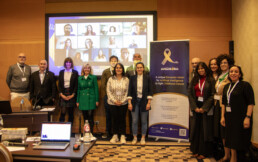
UNICA4EU F2F Meeting in Brussels
The UNICA4EU consortium convened in Brussels on November 15, 2023, for a face-to-face (F2F) meeting that marked a pivotal moment in the journey of leveraging Artificial Intelligence (AI) for Childhood Cancer care in the European Union. This gathering was a blend of reflection on past achievements and strategizing for future endeavors.
The meeting kicked off with a comprehensive overview of the project's current status. Attendees reviewed the substantial body of work that has been completed, including all submitted documents, publications, and milestones achieved thus far. This session not only celebrated the progress made but also set the stage for planning the completion of remaining tasks.
With the project now in its final stretch, discussions turned to organizing a grand closing event. This event aims to bring together key stakeholders in the fields of childhood cancer and AI in healthcare. The goal is to acknowledge and celebrate the significant path laid by UNICA4EU in these crucial areas, fostering a collaborative environment for future advancements.
A major focus of the consortium has been the dissemination of findings and research facilitated by the UNICA4EU project. Numerous white papers, encapsulating the learnings and insights gathered, were presented and discussed. This sharing of knowledge is pivotal to the project’s mission of improving care pathways for childhood cancer using AI.
Understanding the impact of UNICA4EU’s mission and results is crucial. To this end, a plan involving interviews with relevant stakeholders was unveiled. These interviews are designed to gauge the influence of the project on the landscape of AI applications in childhood cancer care within the EU. As a EU-funded initiative, UNICA4EU is committed to mapping and enhancing the application of AI in this critical healthcare domain.
A significant development introduced at the meeting was the new Knowledge Base platform. This platform is envisaged as a comprehensive repository for all the knowledge and resources gathered by UNICA4EU. It represents a foundational step in establishing a robust framework for the application of AI in the fight against childhood cancer, ensuring that insights and resources are accessible for ongoing and future initiatives.
The UNICA4EU F2F meeting in Brussels was more than a mere congregation; it was a testament to the dedicated efforts in harnessing AI for a noble cause. As the project moves forward, the focus remains on enhancing AI-driven solutions in childhood cancer care, ensuring a brighter, healthier future for children across the EU.

UNICA4EU Champions #ChildhoodCancerAwarenessMonth
Pioneering a Unified European AI Approach to Combat Childhood Cancer
September, universally recognized as #ChildhoodCancerAwarenessMonth, witnessed a distinctive shimmer of gold as UNICA4EU stepped forward to lend its resolute support to this cause. With the Golden September movement gaining momentum globally, our project passionately advocates for an integrated European vision to harness the power of Artificial Intelligence (AI) in the battle against Childhood Cancer.
Our Vision: A Harmonised Approach to Childhood Cancer Care
Childhood cancer, while feared and formidable, is an intricate maze of individualized patient pathways. From the moment of diagnosis, the journey of treatment, and all the way through to survivorship, each child’s story unfurls in a unique pattern. Notwithstanding the significant strides taken in establishing clinical and research paradigms catering specifically to young patients, the rarity of childhood cancer presents its own set of challenges.
This rarity often manifests in the form of isolated data repositories, which more often than not, are unlinked and scattered. This fragmentation stems primarily from the absence of a unified approach in data definition, application, and interconnectivity within the healthcare sector. The enormity and sensitivity of the data related to childhood cancer necessitate a more cohesive and integrative approach. This is where we believe the capabilities of AI can be instrumental.
AI holds the promise to bridge these fragmented data silos, thereby ensuring a seamless flow of information, vital for the effective treatment and care of young patients. By leveraging AI's ability to analyze vast amounts of data rapidly, we can gain invaluable insights, facilitate prompt decision-making, and, most importantly, customize care plans to best suit each child's unique requirements. This is what UNICA4EU stands for.
Golden September: A Month of Awareness and Action
Throughout the Golden September, UNICA4EU, in collaboration with its consortium partners SIOP Europe, CCI Europe and PanCare, took center stage in various campaigns and events geared towards increasing awareness about childhood cancer. Our consortium partners, leaders in their own right, echo our sentiments and fervor in championing this cause, and together, we envision a future where every child has a fighting chance against cancer. With UNICA4EU's unwavering commitment and the collective efforts of our partners, this Golden September has not just been a month of awareness but also a testament to the leaps we are prepared to take in our quest to redefine childhood cancer care in Europe.
In conclusion, the fight against childhood cancer is not just about treatment and care but also about innovation, collaboration, and envisioning a brighter, golden future for our young ones. UNICA4EU, with its groundbreaking project, is at the forefront of this battle, and as we commemorate #ChildhoodCancerAwarenessMonth, we reiterate our pledge to ensure that no child stands alone in this fight.

Help shape the future of pediatric cancer care - participate in our survey!
Greetings from UNICA4EU!
We are excited to invite all healthcare professionals engaged in pediatric care to participate in an important survey: Healthcare professionals’ perception on the use of artificial intelligence and digital solutions in pediatrics.
As a continuation of the EU4CHILD project, UNICA4EU aims to understand how AI applications can transform childhood cancer care. We recognize the challenges of data privacy, robustness, interoperability, and collaboration in the digitization of pediatric cancer data. In this pursuit, we’re passionate about leveraging AI to unlock insights from data while respecting ethical, personal, and legal boundaries.
As part of this groundbreaking endeavor, we have launched an anonymous questionnaire to gather insights on the implementation of AI-based solutions in pediatric care. Your perspective will greatly contribute to the development of effective strategies to enhance care for children battling cancer. Rest assured, your responses will remain confidential and will only be utilized for research within the UNICA4EU project.
The survey should take no longer than 10 minutes to complete and includes a series of questions and four clinical scenarios to gather your opinion. We kindly request not to include any personal identifying information in your responses. It will be open until September 30th and the final results will be published by UNICA4EU and also form part of a manuscript to be submitted to a peer-reviewed journal. Your participation is crucial for us to better understand the potential and challenges of AI in pediatric cancer care. We greatly appreciate your invaluable input and contribution to this EU-funded project.
Thank you in advance for helping us shape the future of pediatric care with AI – you can take part in the survey via the link below!
Photo by Caleb Angel on Unsplash

UNICA4EU's F2F Workshop - A significant step forward
The latest face-to-face consortium meeting of UNICA4EU was held in Brussels on the 17th of July, bringing together the thought leaders, domain experts, and stakeholder representatives that make up our esteemed consortium to discuss key developments in the project. The high-intensity dialogue reflected the shared passion and commitment of the partners to drive transformational change in the healthcare landscape.
A critical part of the day’s discussion was steered by coordinator SIOPE, leading the deliberation on potential publications and the long-term sustainability of the project. As we delve deeper into our mission, we remain committed to not just implementing ground-breaking research but also ensuring its sustainability and impact. The consortium explored the potential avenues for publication, thereby amplifying the project's reach and scope.
In a particularly anticipated segment of the meeting, UPM gave a live demonstration of UNICA4EU's knowledge base, showcasing how our information repository has grown and developed. It was exciting to witness the extensive knowledge base, which stands as a testament to the collective learning and shared experience of the consortium. The demonstration proved inspiring and productive, sparking a variety of constructive conversations on the project's advancement.
The next steps for stakeholder consultation were also discussed with much enthusiasm and optimism. Our colleagues at CCI Europe will spearhead focus groups with patients, creating an open forum for feedback and suggestions. We believe that the end-users' perspective is invaluable in shaping an empathetic and effective solution. In parallel, IFIC will be conducting fieldwork interviews to gather nuanced insights from those on the frontline of healthcare. Simultaneously, CCRI will drive community building with related initiatives and projects, fostering a strong network of shared goals and mutual support.
In addition to these steps, there are more exiting news on the horizon, such as the upcoming launch of a survey for healthcare professionals. This will be an invaluable opportunity for professionals within the industry to share their insights and contribute to the project. We eagerly anticipate the valuable insights and perspectives this will bring, further enhancing our work's impact and relevance.
The Brussels meeting marked another significant milestone for the UNICA4EU project, underlining our unwavering commitment to drive change. We look forward to the journey ahead with continued collaboration and innovation, as we work tirelessly to deliver on our vision for a transformed and empowered childhood cancer care.
Stay tuned to our channels to keep up to date!

